Getting to know Rovinj
General information
Time zone: CET (UTC+1)
Summer (DST): CEST (UTC+2)
Postal code: 51000
Dailing code: +385 (0)51
Population: 14,234
Area: 80 km²
Density: 178ppl/km²
Air: Mediterranean climate
January: 5°C to 9°C
August: 22°C to 25°C
Average sea temperature:
June: 22°C
July: 24°C
August/September: 23°C
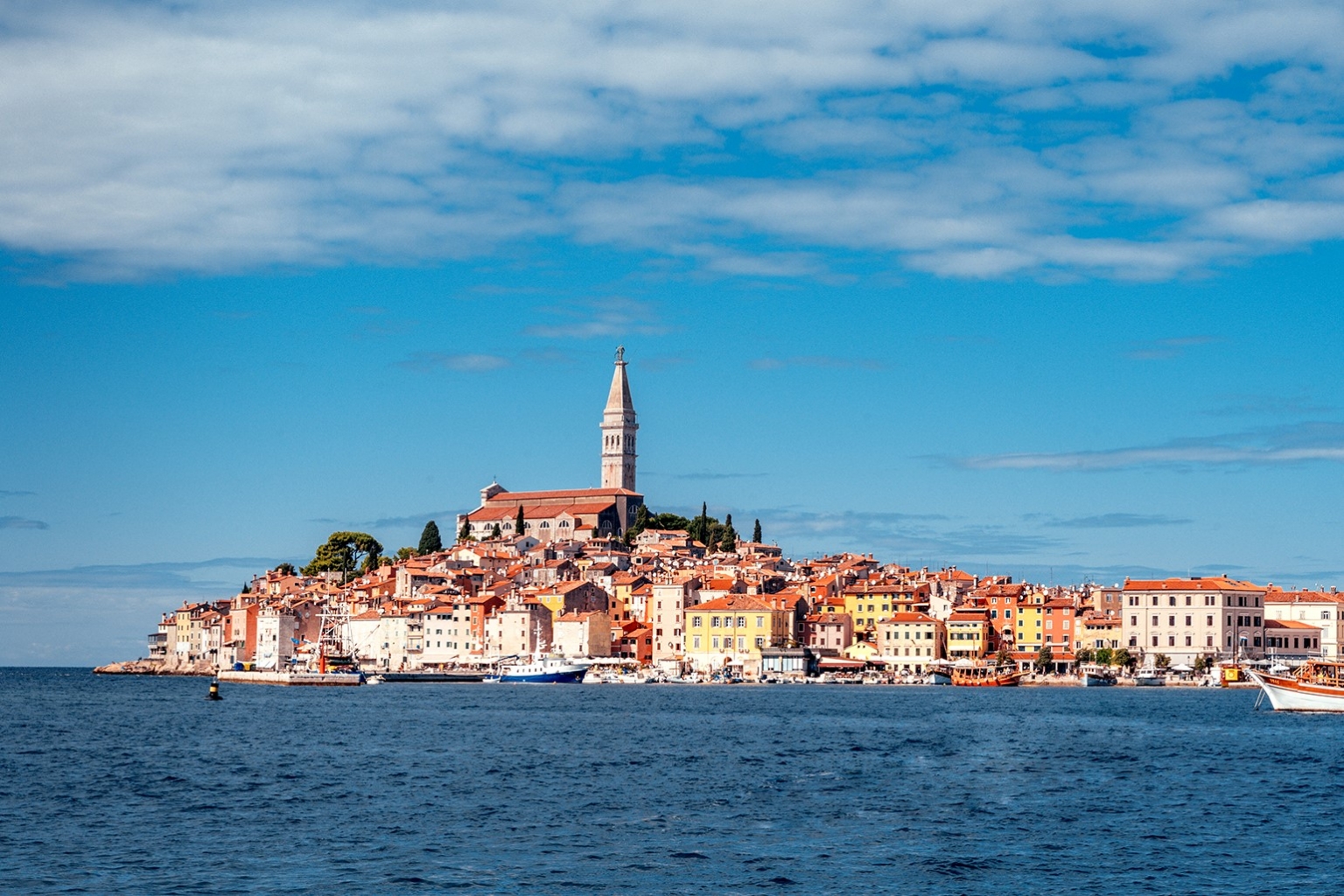
Top 10 Things to do in Rovinj
- Climb the Tower of st. Euphemia
- Take a stroll through the Old town
- Take a ride along the bike trails of the Golden Cape Park Forest
- Visit the Batana Museum
- Visit Monkodonja
- Go birdwatching in the Palud Ornithological Reserve
- Dine at the Wine Vault Restaurant
- Scuba dive to the wreck of the Baron Gautsch
- Sport fishing
- Swim and sunbathe on the beach that connects The Red Island and The Island of Maškin
How to get to Rovinj?
Do you need help?
In case you can not find a direct line to Rovinj, we'll assist and help you find the best option to travel to Rovinj. Please, contact us at sara@meetme.hr or martina@meetme.hr.
Arriving by plane
Rovinj is served by Pula airport approximately 38km south, it's a 40 minutes drive and there are flights from London to Pula in season.
The biggest international airport near Rovinj is in Venice. It's a 3 hours drive from Rovinj but there is also a boat ferry in season that connects Venice to Rovinj.
There is also Zagreb international Airport and Split in Croatia. Another international airport 3 hours drive from Rovinj it's in Ljubljana, Slovenia.
Here is a list of the closest airports to Rovinj:
Arriving by bus
Dubrovnik is well connected with other Croatian cities every day, especially with Zagreb.
There are also connections with cities in Bosnia and Herzegovina, Montenegro, Italy, Germany and Macedonia.
Croatia has daily bus connections to Switzerland, Austria, Serbia, Sweden, Hungary, and the Czech Republic.
Some lines are added in the summer months, so up to date information can be found on Bus Terminal Dubrovnik’s webpage. The same applies to other Croatian bus stations.
Dubrovnik Bus Terminal (phone number 060 305 070) is the only one in Dubrovnik that offers a possibility to leave the luggage in the luggage depository. The station is located in the port of Gruž and is well connected with public transport to all parts of the city. There is also a taxi station and a shopping mall along with other services such as ATMs, which operate 24 hours.
Arriving from North Italy via Rijeka
If you choose to take the highway from Rijeka to Dubrovnik, you will first have to drive towards Zagreb, to Bosiljevo junction, from where you continue towards Split and Ploče where the highway ends, and then further towards Dubrovnik.
Arriving from Slovenia, Austria, Hungary, Czech Republic and Poland via Zagreb
Take the highway from Zagreb to Split and Ploče and then continue towards Dubrovnik.
Arriving from Hungary, Czech Republic and Poland via Osijek
This way, instead through Croatia, will take you through the neighboring Bosnia and Herzegovina. From Osijek you should continue to Sarajevo and then through Mostar to Metković and then you continue towards Dubrovnik. For those of you coming from central Europe, this is the longest route but also the most exciting. Bosnia is a European country with an oriental twist.
Arriving from Romania and Bulgaria
It’s easiest to take the road to Leskovac in Serbia and then towards Peć and Podgorica where you continue towards Budva and then follow the coastal road to Herceg-Novi and the Croatian border. There is also a continental route through Montenegro but it’s best to get to the coast to see the beautiful bay of Boka Kotorska, the town of Kotor and St. Stefan.
Arriving by boat
Rovinj is well connected with ferries traveling the north adriatic. Here's a list of seasonal ferries departing harbors and travel duration: